Driving the Future of Solid-State Batteries
At the Federal Institute for Materials Research and Testing (BAM), we are developing next-generation battery technologies designed to go beyond the limits of today’s lithium-ion systems. Our goal is to create batteries that charge faster, last longer, and rely on more sustainable and widely available materials.
Conventional lithium-ion batteries are reaching their performance ceiling. Their graphite-based anodes can only store a limited number of ions, which restricts how much energy they can deliver. We are exploring alternatives based on metallic sodium, an abundant and cost-effective material that could increase energy density by up to 40%.
However, metallic anodes require solid electrolytes for safe operation. This introduces a key challenge: maintaining stable contact between the solid anode and the solid electrolyte. During battery operation, small gaps can form at this interface, reducing performance and limiting lifetime.
Our Approach: Liquid Metal Anodes
To overcome this limitation, we are developing innovative electrode concepts based on partially liquid alkali metals. These materials can adapt to the interface, maintaining continuous contact and improving battery stability.
In our research, we have demonstrated that liquid alkali metal anodes can significantly outperform conventional graphite anodes. The challenge is that such systems typically operate at very high temperatures. Our work focuses on bringing these advantages to room temperature by modifying the composition of the anode-for example, by introducing potassium to lower its melting point.
Advanced Solid Electrolytes as a Key Enabler
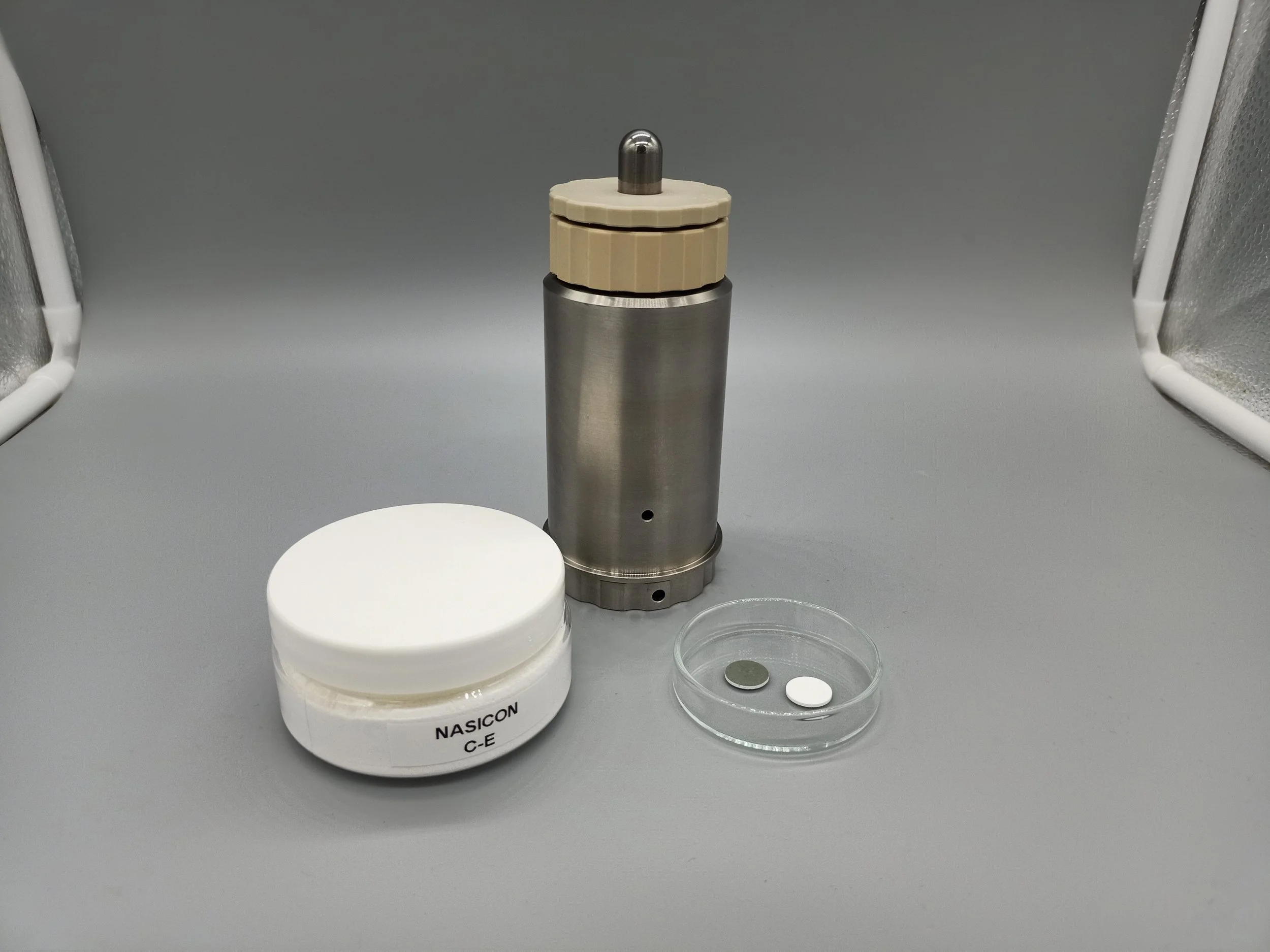
A central part of our work is the development of new solid electrolytes based on sodium super ionic conductor (NASICON) materials. These materials offer high ionic conductivity and excellent chemical stability, even in contact with potassium-containing systems.
We are also working to optimize these materials by identifying sustainable and cost-effective additives that maintain high performance without relying on scarce elements. Promising candidates are tested directly in sodium-based battery systems to accelerate real-world application.
Towards Sustainable High-Performance Energy Storage
By combining advanced solid electrolytes with innovative liquid metal electrode concepts, we are laying the foundation for a new generation of solid-state batteries. These technologies have the potential to drastically reduce charging times, improve energy density, and enable more reliable and scalable energy storage solutions.
Our work contributes to making batteries not only more powerful, but also more sustainable—supporting the global transition to clean energy and a low-carbon future.
Solid electrolytes